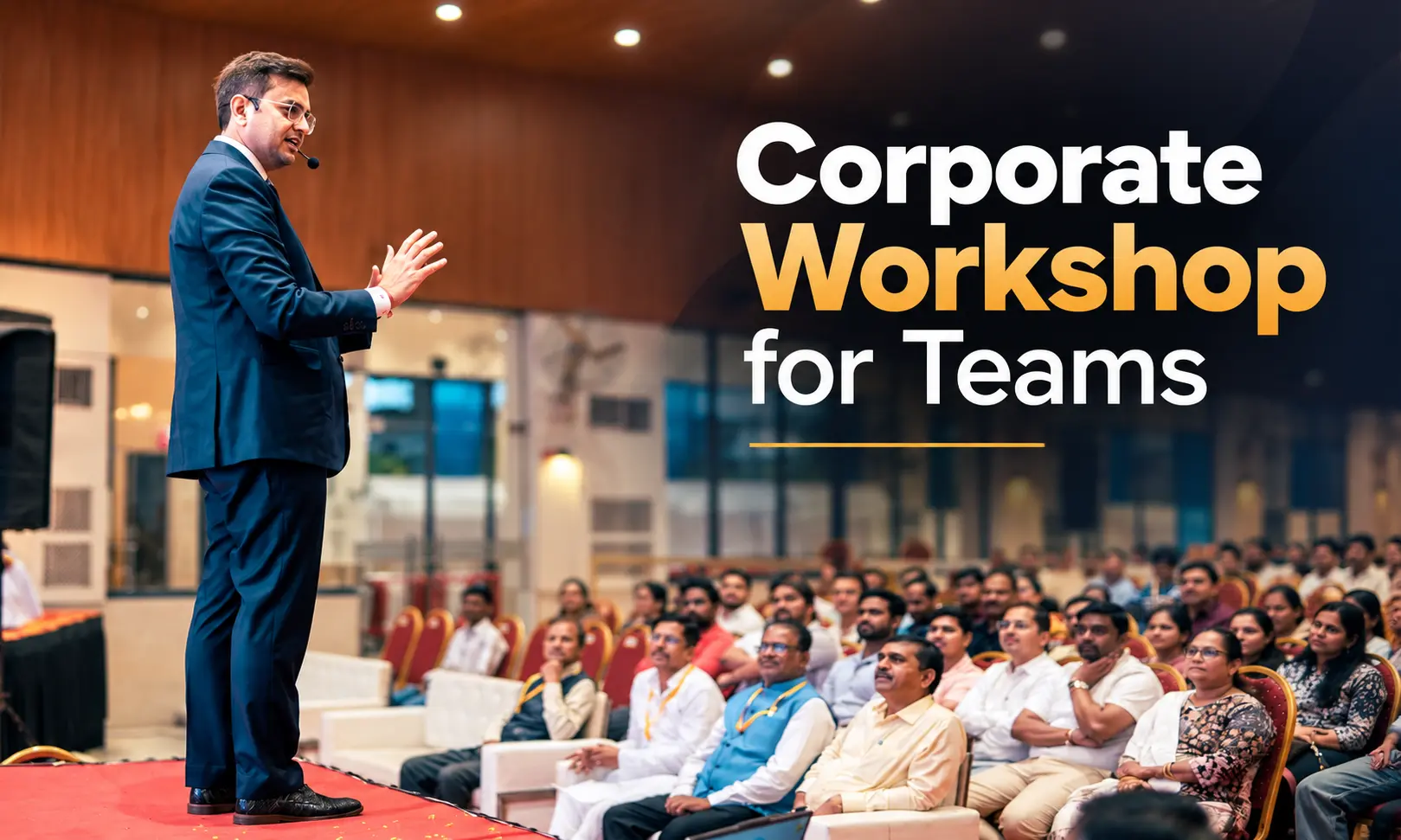

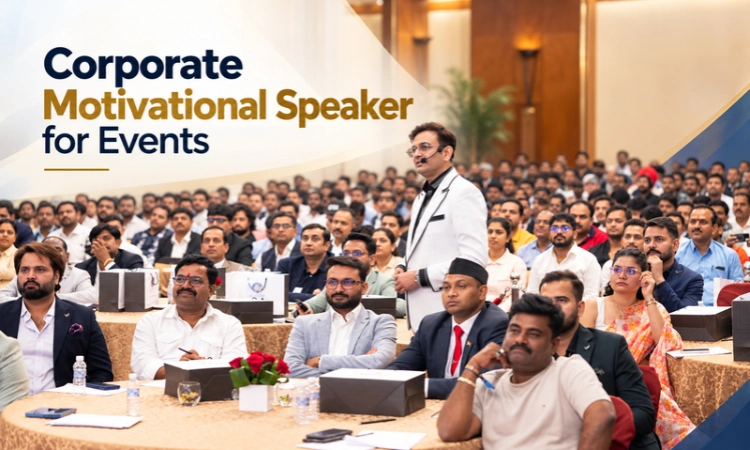


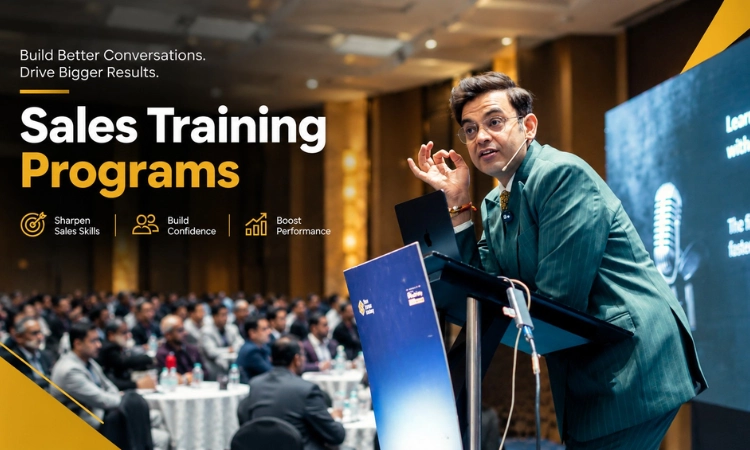

Indian companies will spend somewhere between USD 6 billion and 15 billion on corporate training in 2026, depending on whose estimate you trust. Yet decades of research say that only 10–30% of what is taught in a training room ever shows up in how people actually work on Monday morning.
That gap is the whole story of corporate training in India right now. Budgets are growing at double-digit rates. HR heads are under pressure to “do something” about attrition, AI, and a workforce where 38% of job seekers say they feel unprepared for how fast skills are changing. And yet most corporate training sessions in India still end the way they always have: a feedback form, a group photo, and a slow return to old habits.
This guide is written for the people who sign off on those budgets, HR leaders, L&D managers, founders, and sales heads, and it does three things. It shows you the real data on the Indian corporate training market and what the research says about ROI. It explains why most sessions fail and what the ones that work do differently. And it gives you a practical checklist (and honest pricing benchmarks) for choosing a corporate trainer in India, so the next session you book is one your team still talks about six months later.
If you only have two minutes: the single biggest predictor of whether a training session changes behaviour is not the trainer’s energy or the slide deck. It is whether the session was designed around a specific business problem, and whether a manager reinforces it afterwards. Everything below builds on that.
What Corporate Training in India Actually Means Today
Corporate training in India is any structured learning an employer pays for to change how its people perform at work: leadership, sales, communication, compliance, technical skills, or mindset. The definition has not changed much. What has changed is who is buying it, how it is delivered, and what buyers expect to see at the end.
Ten years ago, corporate training sessions in India were mostly a large-company affair, run by HR as an annual calendar event. Today the buyer base looks very different:
- Global Capability Centres (GCCs) — India now hosts 1,700+ GCCs employing about 1.9 million professionals, and they run continuous, role-based learning programmes rather than one-off workshops.
- Family-run and founder-led businesses — manufacturing, real estate, FMCG distribution, pharma and retail chains that have outgrown the founder’s ability to personally drive every sales team and every decision.
- Fast-scaling startups and SMEs — companies where 25-year-old managers are suddenly leading teams of 15 with no leadership training at all.
- Sales-driven organisations — real estate developers, insurance, direct selling, ed-tech counsellor teams, and distributor networks where one strong session can lift a quarter’s numbers.
Delivery has shifted just as hard. In 2020, roughly 55% of paid corporate learning in India was digital or blended; by 2025 that figure was 73% and is projected to hit 87% by 2031. But here is the counter-intuitive part: instructor-led training still holds about 43% of global corporate training spend, because for leadership, sales and behaviour change, companies keep coming back to a live room with a human in front of it. Online content is cheap and scalable. Behaviour change is neither.
So when an HR head in Pune or Gurugram searches for “corporate training sessions in India” in 2026, they are usually looking for one of three things: a high-energy session that resets a team’s mindset, a skill-building workshop with a clear curriculum, or a longer programme that changes how managers actually manage. Knowing which of these you need, before you call a trainer, is half the battle. The next section shows why the stakes are higher than most leadership teams realise.
The Corporate Training Market in India: Numbers That Matter in 2026
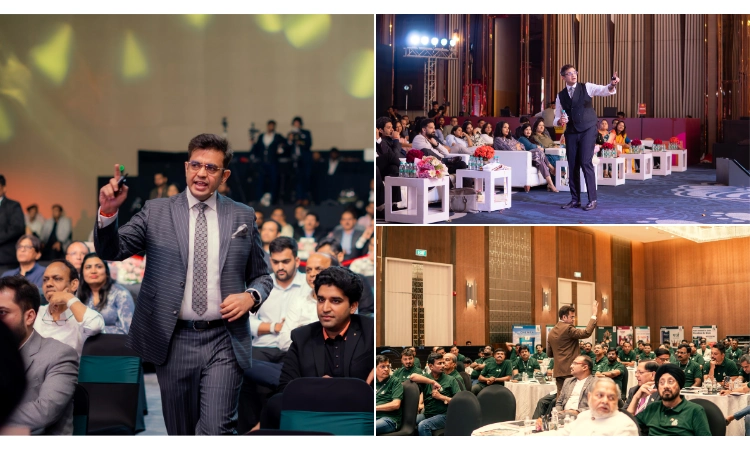
The honest answer to “how big is corporate training in India?” is that it depends on what you count. Two credible estimates bracket the range:
Source | 2025 size | Forecast | CAGR |
Ken Research (counts only third-party enterprise spend, excludes internal trainer payroll) | USD 6.18 billion | USD 12.91 billion by 2031 | 13.1% (2026–31) |
IMARC (broader definition incl. platforms and internal programmes) | USD 12.2 billion | USD 39.9 billion by 2034 | 12.86% (2026–34) |
Whichever you use, the direction is the same: Indian corporate training is growing at roughly 13% a year, faster than China (about 9%) and more than double the global market’s 7%. South India (Bengaluru, Hyderabad, Chennai, Pune) is the largest demand hub at around 36% of spend, with North and West India close behind.
Six numbers every L&D buyer in India should know
- Only 2.3% of India’s workforce receives formal training, according to the SHRM India Skill Intelligence Report 2026 (cited by Mordor Intelligence). In a country where 62% of the population is working-age, that is the real size of the opportunity, and the real size of the gap.
- Paid learner seats grew from 27.3 million (2020) to 39.6 million (2025) and are projected to reach 72.4 million by 2031 (Ken Research). Companies are not just spending more; they are training more people, more often.
- Average external spend per learner seat is about USD 156 (roughly ₹13,000) per year in India, rising toward USD 178 by 2031.
- 75% of surveyed Indian employees trained only when a programme was mandatory in 2025. Attendance is easy; engagement is the problem.
- 39% of workers’ core skills are expected to change by 2030 (WEF Future of Jobs 2025), so a one-time skilling event cannot keep up.
- India’s employability rose from 46.2% in 2022 to 56.35% in 2026 (India Skills Report 2026), but 74% of Indian recruiters still report difficulty finding qualified talent. Companies are increasingly choosing to build talent rather than buy it.
What the research says about ROI
This is where the conversation usually gets vague, so let us be specific. A peer-reviewed study of 108 bank employees in India (Bhat, Indian Journal of Applied Research, 2013) found a Pearson correlation of 0.747 between training and employee performance, with training explaining 55.9% of the variation in performance (R² = 0.559, t = 9.634, p < 0.01). In plain English: in that sample, more than half of the difference between a high-performing and an average employee was explained by the training they had received.
Similar findings come from Indian BPO studies (positive impact on productivity and performance), comparative studies across public and private sector banks, and a 2026 longitudinal study of 458 employees in Indian financial services, where a blended development intervention produced statistically significant performance gains, with internally developed employees outperforming externally hired peers.
The global data points the same way. LinkedIn’s Workplace Learning Report finds 94% of employees would stay longer at a company that invests in their development, and companies with strong learning cultures show 57% higher retention and 23% higher internal mobility. Gallup puts global employee engagement at just 20%, its lowest since 2020, costing the world economy roughly USD 10 trillion a year.
So training works. The data on that is not ambiguous. What the data also shows, as the next section makes painfully clear, is that most training as it is currently delivered does not.
Types of Corporate Training Sessions in India (and When Each One Makes Sense)
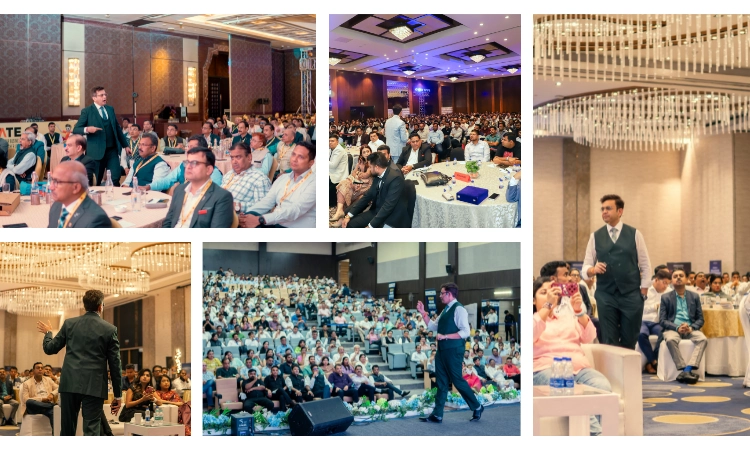
Not every business problem needs the same kind of session. Here is how corporate training programs in India are actually bought in 2026, matched to the problem each one solves.
Type of session | Solves this problem | Typical format | Who buys it most |
Leadership & management training | First-time managers, second-line leadership missing, founder is the bottleneck | 1–2 day workshop or 3–6 month programme | Family businesses, scaling startups, manufacturing |
Sales training | Targets missed, high dependence on 2–3 star performers, weak follow-up discipline | Full-day workshop + 30-day follow-through | Real estate, insurance, pharma, direct selling, ed-tech |
Employee motivation & mindset sessions | Low energy, complacency, post-layoff or post-merger morale, year-start kick-offs | 2–4 hour keynote or half-day session, 50–1,000+ people | Any industry; annual meets, dealer conferences, town halls |
Team performance & culture workshops | Silos, blame culture, cross-department friction, accountability gaps | Full-day or multi-day, 25–100 people | IT, BFSI, retail chains, hospitals |
Communication & soft skills | Client-facing staff who cannot pitch, present or handle objections | Half-day to 2 days | BPO, counsellor teams, hospitality, customer success |
Technical & digital skills | AI tools, cloud, data, software upskilling | Multi-week cohorts, mostly online | IT services, GCCs, fintech |
Compliance & safety | POSH, Factories Act, ISO, financial regulation | Mandatory, often e-learning | Manufacturing, BFSI, pharma |
Two patterns stand out in the Indian market right now.
Technical and digital skills take the biggest share of budget (about 28% of spend), driven by AI reskilling. But interpersonal, culture and leadership training is the fastest-growing category globally (8.56% CAGR), because companies have discovered that teaching someone a tool does not make them a better manager, a better seller or a more accountable colleague.
Formats are converging on hybrid. The most common request Indian trainers now get is: one high-energy in-person session for the whole organisation, followed by virtual follow-ups for regional teams. In-person for impact, virtual for reach, and a manager-led reinforcement plan in between.
A practical tip: if you cannot name the specific business metric a session should move (conversion rate, attrition in the first 90 days, time-to-decision, cross-sell ratio), you are not ready to book one yet. Write that metric down first. Then pick the format.
How to Choose a Corporate Trainer for Employees
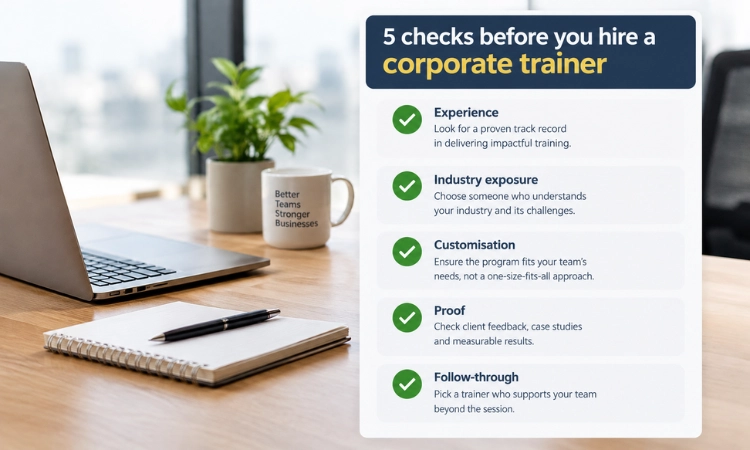
The trainer matters more than the topic. Check these five things before you sign off on a corporate trainer for employees.
- Experience. A trainer who has spent years with corporate teams has already seen your problem in another company. Ask how long they have trained corporate audiences, not only public ones.
- Industry exposure. A bank’s sales floor, a pharma field force and a factory shop floor face different pressures. Ask which companies in your sector they have worked with.
- Customisation. Generic content is forgotten by Monday. A serious trainer runs a discovery call and builds the session around your targets and challenges.
- Proof. Client lists and session footage are hard to fake. Ask to see past sessions and speak to a reference.
- Follow-through. Behaviour changes through reinforcement, not one event. Ask what tools participants take back to work.
Red flags:
- The same slide deck for every client.
- No questions about your team or targets before quoting.
- Fixed percentage promises without knowing your baseline.
See also: why every growing business needs a corporate trainer.
How to Measure the ROI of Corporate Training
Agree on the measures before the session, record a baseline, and review at 30, 60 and 90 days.
Level | What you measure | How | When |
|---|---|---|---|
1. Reaction | Did people find it relevant? | Feedback form | Same day |
2. Learning | What did they retain? | Short quiz, manager debrief | Within 1 week |
3. Behaviour | What are they doing differently? | Manager observation, CRM activity | 30 to 60 days |
4. Results | Did the business number move? | Conversion, attrition, productivity | 60 to 90 days |
The metric depends on the program. For sales training, watch conversion rate and follow-up completion. For leadership training, watch team attrition and how many decisions close without escalation. For motivation and culture sessions, watch attendance, voluntary participation and internal survey scores.
We explain the performance link further in how corporate training improves employee performance and retention.
Why Companies Choose Sonu Sharma for Corporate Training in India
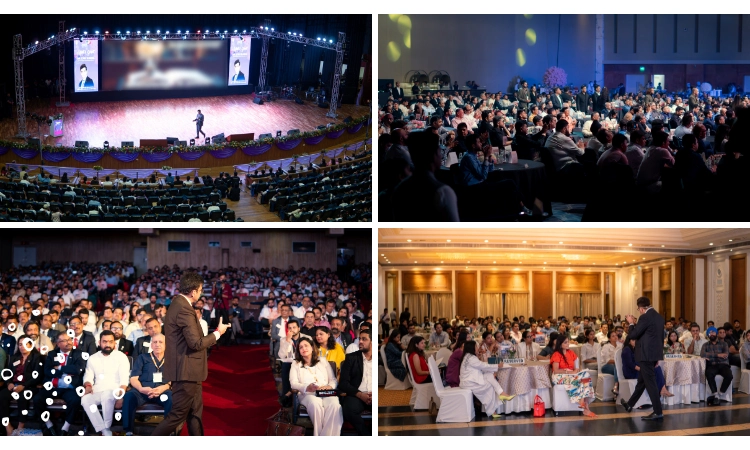
Sonu Sharma has trained professionals, sales teams and leaders across India for more than 20 years, which is why he is counted among the best corporate trainers in India.
The numbers behind that reputation: 20+ years of training, 250+ corporate clients, in-person sessions across 30+ cities and 30M+ social media followers. His sessions combine practical business frameworks with a delivery style that holds a hall of a thousand people.
- Customised every time: each session is built around your culture, industry and current challenge, starting with a discovery call.
- Four core programs: high-performance team culture, leadership training, employee motivation and team performance workshops.
- Any format: in-person, live virtual and hybrid, for teams of 25 to 1,000+.
- Trusted names: his client roster includes Maruti Suzuki, Aditya Birla Group, Adani Group, ICICI, HP and Abbott.
- Beyond one topic: companies also engage him as a sales trainer in India and a motivational speaker in India.
How to book a session
- Share your requirements: company, team size, preferred date and the challenge to solve.
- Get a custom proposal: structure, duration, format and investment within 24 to 48 hours.
- Confirm and schedule: dates are locked and the content is tailored to your team.
- Session day: a high-energy session with tools your team can apply the next working day.
Planning corporate training for your team? Book a corporate session, call +91 91513 13101 or write to office@sonusharma.in.
Frequently Asked Questions
What is corporate training in India?
It is employer-funded learning that builds the skills, mindset and leadership ability of employees. It typically covers leadership, sales, communication, motivation and team performance.
What does a corporate trainer for employees do?
A corporate trainer studies the company’s goals and gaps, designs a session around them, and delivers it through talks, exercises and role-plays. The aim is a visible change in how employees sell, lead and take ownership.
How long do corporate training sessions in India last?
Sessions range from a short keynote to half-day, full-day and multi-day programs. The right length depends on the objective and the size of the group.
How much does corporate training cost in India?
There is no standard rate. The investment depends on the trainer’s experience, duration, audience size, format and level of customisation.
Who is the best corporate trainer in India?
The best trainer is the one with relevant experience, proof of results and content built for your team. Sonu Sharma, with 20+ years of experience and 250+ corporate clients, is one of the most trusted corporate trainers in India.
Key Takeaways
- Only 23% of Indian employees are engaged, and manager engagement fell nine points in a year.
- Match the program to the problem: leadership, sales, motivation, communication or team performance.
- Pick the format by goal: in-person for energy, virtual for reach, hybrid for alignment.
- Judge a trainer on customisation, proof, and follow-through, and agree on metrics first.
Ready to build a high-performing team? Explore corporate training sessions in India with Sonu Sharma.