





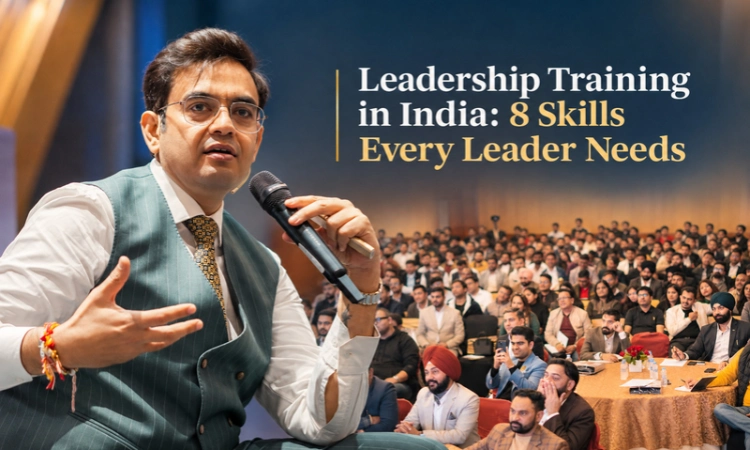
Leadership training in India helps managers and business owners build the skills they need to guide teams, make better decisions, and deliver consistent results. The most effective programs focus on a few practical skills: clear communication, emotional intelligence, team management, decision-making, coaching, and the ability to keep people engaged and motivated.
If you have ever promoted your best performer to team leader and watched them struggle, you already know why this matters. Technical skill gets people promoted. Leadership skill keeps teams productive once they are.
This guide covers the skills every successful leader must develop, how leadership training programs build them, and how to choose the right one for your team.
Why Leadership Training Matters in India Right Now
Indian workplaces are changing fast. Teams are younger, more diverse, and often spread across cities or working in hybrid setups. Employees today expect clarity, feedback, and growth, not just instructions.
Most people become managers because they were good at their previous job, not because anyone taught them how to lead. That gap shows up as missed targets, unclear expectations, high attrition, and teams that do only what they are told.
Good corporate leadership development closes that gap. It gives leaders a framework and practice, so they stop learning leadership through costly mistakes.
8 Key Skills Every Successful Leader Must Develop
1. Clear and Confident Communication
Most workplace problems trace back to unclear communication. A leader who says “get this done soon” and expects delivery by Friday will be disappointed by someone who understood “next week.”
Strong communicators do three things well:
- They state the goal, the deadline, and the reason behind the task.
- They listen fully before responding.
- They check understanding by asking the team member to repeat the plan in their own words.
2. Emotional Intelligence
Emotional intelligence is the ability to understand your own reactions and read the people around you. A leader with this skill stays calm when a deal collapses, notices when a usually cheerful team member goes quiet, and gives feedback without damaging trust.
A simple habit to start with: before reacting to bad news, pause for ten seconds and ask, “What does this person need from me right now?”
3. Team Management Skills
Team management skills decide whether a group of talented people becomes a high-performing team or a collection of individuals. The basics are simple, but they need discipline:
- Delegate with clarity. Hand over the outcome and the authority, not just the task.
- Match people to strengths. A detail-focused person and a relationship-focused person need different roles.
- Hold regular one-on-ones. Fifteen focused minutes a week prevents many problems from growing.
- Resolve conflict early. Small friction ignored for a month becomes a team-wide issue.
4. Decision-Making Under Pressure
Leaders are rarely given complete information. Waiting for certainty slows everyone down, while deciding on impulse creates rework.
A useful approach is to separate decisions into two types. Reversible decisions, like trying a new meeting format, can be made quickly. Irreversible ones, like hiring a senior role or changing a pricing model, deserve more time and input.
5. Employee Engagement
Employee engagement is not about pizza parties or annual awards. It comes from daily leadership behaviour. Engaged employees understand why their work matters, feel their manager notices their effort, and see a path to grow.
Practical ways leaders can improve engagement:
- Recognise specific effort, not just results. “Your follow-up call saved that client” works better than “good job.”
- Ask for ideas and act on at least some of them.
- Share the bigger picture so people see how their work connects to company goals.
- Discuss growth openly, even if a promotion is not immediately available.
6. Coaching and Giving Feedback
The best leaders act more like coaches than supervisors. Instead of giving answers, they ask questions like “What options have you considered?” and “What would you try first?”
When giving feedback, keep it specific, timely, and focused on behaviour. Say “In yesterday’s presentation, the pricing slide was unclear,” rather than “You need to present better.”
7. Adaptability and Resilience
Markets shift, clients leave, and plans fail. Leaders who stay steady during setbacks give their teams permission to do the same. Resilience does not mean ignoring problems. It means facing them, learning from them, and moving forward with a clear next step.
8. Handling Rejection and Setbacks (Especially in Sales Leadership)
If you lead a sales team, you must also teach your people how to deal with “no.” Rejection is part of every sales job, and a team that fears it will stop calling, stop following up, and stop growing.
Here is how to handle sales rejections, and how leaders can coach their teams to do the same:
- Separate the person from the outcome. A “no” is a response to an offer at a particular moment, not a verdict on the salesperson.
- Ask why, politely. “Could you share what made this not the right fit?” often gives you the most useful feedback you will get all week.
- Review calls as a team. Look at what worked and what did not, without blame.
- Track the numbers. Most sales have a conversion ratio. When people know that ten conversations may lead to two sales, each rejection feels like progress toward the next yes.
- Follow up. Many “no” answers really mean “not now.” A respectful follow-up after a few weeks can reopen the conversation.
- Celebrate effort. Reward the calls made, not only the deals closed.
A good sales coach in India helps teams practise these habits through role-plays and real-call reviews, so that confidence is built before the next difficult conversation, not after it.
What Do Leadership Training Programs Usually Include?
Not all leadership training programs look the same. The format should match your team’s size, level, and goals. Common options include:
- Workshops and classroom sessions. Best for building shared language and practising skills such as feedback, delegation, and conflict handling.
- Role-plays and case discussions. Useful for practising difficult conversations in a safe setting.
- Coaching sessions. One-on-one support for senior leaders working on specific challenges.
- Leadership skills training for new managers. Focused on the first 90 days: setting expectations, managing former peers, and running effective meetings.
- Sales leadership programs. Designed for team leads who manage targets, pipelines, and motivation.
- Keynotes and motivational sessions. A strong motivational speaker in India can energise a large audience and set the tone for a longer training journey, though a single talk works best when it is followed by practical sessions.
The most effective approach usually combines a short inspiring session with hands-on practice and follow-up. A one-day event without follow-up rarely changes habits.
Benefits of Corporate Training for Leaders and Organisations
The benefits of corporate training go beyond a good day out of the office. When training is practical and followed up, organisations typically see:
- Better team performance. Leaders who set clear expectations and give regular feedback get more consistent results.
- Lower attrition. People often leave managers, not companies. Better managers help retain good employees.
- Faster decisions. Leaders with a decision framework spend less time stuck.
- Stronger sales confidence. Teams trained to handle rejection keep their pipeline active.
- A common leadership language. When every manager uses the same approach to feedback and goal-setting, the culture becomes more consistent.
- Leaders who grow from within. Developing people internally is often more effective than hiring senior talent from outside.
How to Choose the Right Leadership Training in India
Searching for the best corporate trainer in India will give you many names. These questions help you separate real value from polished marketing:
- Do they understand your industry and team level? Training for a first-time manager is very different from training for a CEO.
- Is the content practical? Ask for examples of exercises, role-plays, and tools your team will use after the session.
- Do they customise? A trainer who asks about your challenges beforehand is a good sign.
- Is there follow-up? Look for action plans, check-ins, or reinforcement sessions.
- How will success be measured? Even simple measures help, such as engagement survey scores, sales conversion, or manager feedback.
- Can they speak your team’s language? Many Indian teams respond best to a trainer who can mix English and Hindi naturally and use relatable examples.
A Simple 30-Day Plan to Start Developing Leadership Skills
You do not need to wait for a formal program to begin. Try this:
- Week 1: Ask three team members for honest feedback on how you communicate. Listen without defending.
- Week 2: Start weekly one-on-ones with each direct report. Ask what is going well, what is blocking them, and what support they need.
- Week 3: Pick one task to delegate fully, with a clear outcome and deadline. Resist the urge to step in.
- Week 4: Recognise one specific piece of good work publicly, and give one piece of improvement feedback privately.
Small, repeated actions build leadership habits faster than occasional big efforts.
How Sonu Sharma Supports Leaders and Teams
Sonu Sharma is a corporate trainer, motivational speaker, and sales coach who works with organisations and professionals across India. His sessions focus on practical leadership, team management skills, employee engagement, and sales performance, with real-life examples and activities that participants can use the next day at work.
Frequently Asked Questions
- What is leadership training?
Leadership training is a structured way of building the skills managers and leaders need to guide teams, such as communication, delegation, decision-making, coaching, and conflict resolution. It combines learning with practice so that skills are used at work, not just understood in theory.
- Who should attend leadership training programs?
Anyone who manages people or is about to. This includes new team leaders, mid-level managers, senior leaders, business owners, and high-potential employees being prepared for their first leadership role.
- How long should leadership training last?
There is no single answer. A focused workshop can run for one or two days, while deeper programs run over several weeks or months with practice between sessions. Longer programs with follow-up tend to bring more lasting change.
- How is leadership skills training different from general corporate training?
General corporate training covers a wide range of topics, such as technical skills, compliance, or product knowledge. Leadership skills training focuses specifically on how to guide, motivate, and develop people.
- How can leaders improve employee engagement?
Start with regular one-on-ones, specific recognition, clear goals, and honest conversations about growth. Engagement improves when employees feel heard, valued, and clear about what is expected of them.
- How do you handle sales rejections without losing motivation?
Treat rejection as feedback on the offer or timing, not a judgment on you. Ask what led to the decision, review the conversation, track your conversion ratio, and follow up where it makes sense. A supportive manager who normalises rejection makes this much easier.
- Is a motivational speaker enough for developing leaders?
A motivational session can inspire and energise a team, but lasting change usually needs practical training, practice, and follow-up. The best results come from combining both.
Conclusion
Successful leadership is not about authority or a job title. It is built on skills that can be learned: communicating clearly, understanding people, managing teams, making sound decisions, keeping employees engaged, and staying resilient when things do not go as planned.
Whether you are a new manager or an experienced leader, investing in leadership training in India is one of the most practical ways to improve both your results and your team’s experience at work. Start with the small habits in this guide, and consider a structured program when you are ready to go deeper.