
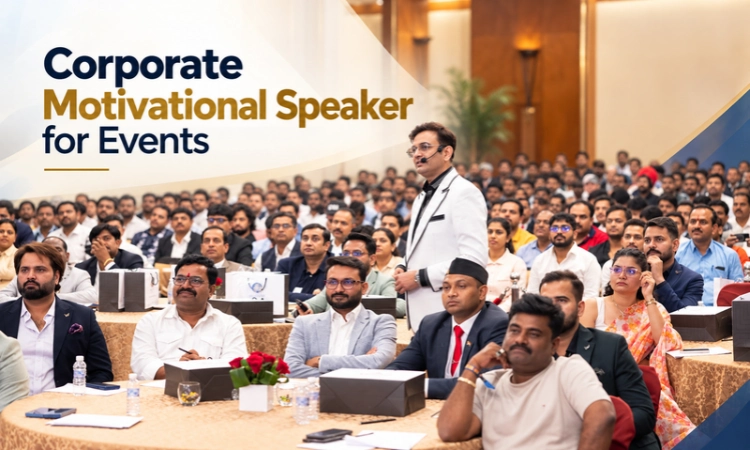
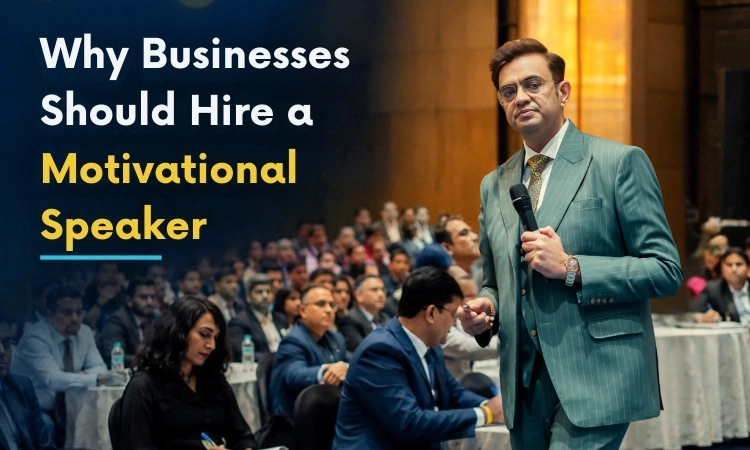
Ever walked into an office where everyone looks tired before lunch even starts? Yeah, that’s more common than most business owners like to admit. Deadlines pile up, targets get tougher every quarter, and somewhere in between all that, employee morale quietly takes a hit. This is exactly where a motivational speaker for businesses steps in and changes the game, sometimes in ways spreadsheets and quarterly reviews just can’t touch.
Across India, companies both big and small are catching on. Hiring a corporate motivational speaker isn’t the fancy add-on it used to be seen as. It’s becoming a genuine business need. Whether it’s an annual meet, a sales kickoff, or just a Monday that needs some energy, bringing in the right voice can shift the entire mood of a workplace. In this guide, we’re going to break down why exactly businesses (big or small) should consider getting a motivational speaker in India on board, and how to actually make that investment worth it.
Companies spend lakhs on office infrastructure, on the latest software, on ergonomic chairs, and so on. But the mind of an employee, the actual thing driving all that output, often gets ignored until it starts showing cracks. A single session with the right speaker can sometimes do what months of internal memos and HR emails couldn’t. That’s not an exaggeration either, ask any HR head who’s actually organised one. In this blog, we’ll give you 10 reasons why every business needs to hire a motivational speaker in India.
What Does a Motivational Speaker Do for Businesses?
In simple words, a motivational speaker helps people remember why they started working in the first place. Somewhere between the routine tasks and the endless meetings, purpose tends to get lost. A good speaker brings that purpose back to the surface.
A good session is never just someone giving an inspiring talk and walking off stage. A motivational speaker for corporate events tends to blend several things together.
- Real stories employees can relate to, not textbook theory
- Big ideas like resilience, focus, or leadership are broken down into steps people can actually use
- An emotional pull that most training sessions never manage to create
- A nudge for employees to look inward at their own habits and mindset
- Something practical enough to try the very next morning at their desk
Some speakers get into stress management, handling rejection, or sharpening communication across teams. What gets covered usually comes down to what the business actually needs right then. And here’s the thing: a good speaker doesn’t just entertain the room. They leave something behind that training manuals rarely manage to.
10 Reasons to Hire a Motivational Speaker in India
Now let’s get into the actual reasons. Some of these might sound obvious at first glance, but there’s more depth to each one than what meets the eye.
1. Boosts Employee Motivation
This one’s the most obvious, but also the most important. Employees, no matter how skilled, hit low phases. It’s human nature, honestly. A motivational speaker for employees knows exactly how to tap into that dip and pull people out of it.
A manager giving a pep talk can feel repetitive; we’ve all sat through those. An external speaker doesn’t carry that baggage. No office politics, no history with the team, just someone walking in fresh and actually connecting. And that connection tends to leave people genuinely fired up. There’s something about hearing “you’re capable of more” from a stranger, outside the usual chain of command, that just lands harder.
2. Improves Employee Productivity
Motivation and productivity tend to move together. Not in a perfectly straight line, but close enough. Give someone’s mind a bit of a recharge, and their output usually follows on its own. Nothing complicated here, just how people work.
A well-delivered session can:
- Reduce procrastination by reframing how employees look at their task
- Help staff set clearer, more realistic goals for themselves
- Improve focus during work hours because the “why” behind the work becomes clearer
Companies that pair corporate training in India with motivational sessions tend to notice a shift, teams start approaching their daily targets differently. It doesn’t happen overnight. But the momentum builds, and it’s real.
3. Builds Confidence
Confidence is weird. Some people have it naturally, others need a nudge, and a lot of employees are just sitting on untapped potential because they don’t believe in themselves enough. A skilled speaker addresses this directly, often through personal stories of failure and comeback.
When someone stands on stage and says, “I failed too, multiple times, and here’s how I got past it”, it does something to the room. Employees start seeing their own struggles as normal, not as a sign of incompetence. That shift alone can unlock confidence that’s been sitting dormant for years.
4. Strengthens Teamwork
Teams don’t build themselves overnight, and honestly, most team-building exercises feel forced (the trust falls, the awkward icebreakers). A good corporate event speaker takes a different route. They tell stories, run interactive exercises, and get people talking, laughing, and reflecting together.
This kind of shared moment does more for team bonding than people usually give it credit for. Colleagues who barely exchange two words outside meetings suddenly find something in common. It won’t fix a broken team dynamic on its own, but it does crack open doors that used to stay shut.
5. Develops a Positive Workplace Mindset
Culture gets built slowly, brick by brick, and negativity has a way of sneaking in unnoticed. A cynical comment here, a complaint there, and pretty soon the whole floor’s energy has dipped without anyone quite clocking when it happened.
Motivational speakers help reset that tone. Rather than the usual vague “just stay positive” advice, they walk through practical, non-preachy ways to interrupt negative thinking and hand employees actual tools. Do this even once or twice a year, and slowly the workplace starts treating positivity as normal instead of forced.
6. Helps Employees Handle Challenges
No job comes without its share of setbacks: missed targets, difficult clients, internal restructuring, and so on. What separates the strong teams from the average ones often just comes down to how they handle these moments.
Someone who’s actually lived through failure (business collapses, personal setbacks, career pivots) tends to teach recovery better than someone who’s only read about it. Sales teams in particular benefit here. Learning to take rejection without letting it chip away at confidence is a skill that shows up directly in revenue numbers. Motivational input and practical skill training genuinely overlap in this space.
7. Supports Better Leadership
Leadership doesn’t only belong to people with “manager” stamped on their title. Everyone’s leading something, whether that’s a project, a small team, or just how they manage their own workload. The best motivational speaker for corporate events will usually work leadership lessons right into the talk itself, decision-making under pressure, owning up to mistakes, and leading through example instead of hierarchy.
Some businesses go a step further and pair these sessions with structured programs from the best corporate trainer in India, creating a longer-term leadership development track. The motivational session sparks the mindset shift, and the training builds the actual skill set on top of it.
8. Improves Employee Engagement
Disengaged employees cost businesses more than most owners realise, with quiet quitting, low participation in meetings, and minimal initiative. It’s a slow leak that eats into productivity without raising immediate alarms.
Motivational sessions act like a jolt that wakes people up again. Here’s what tends to happen after a good session:
Before the Session | After a Good Session |
Employees are just going through the motions | Employees actively participating in discussions |
Low interest in company goals | Better alignment with the company vision |
Minimal feedback or suggestions | More proactive input from teams |
It’s not a permanent fix on its own, but as a trigger point, it works surprisingly well.
9. Encourages Personal and Professional Growth
Motivational speakers rarely stick to work topics only, and that’s kind of the point. Employees are people before they’re employees. Financial stress, family pressure, self-doubt, all of it follows them into the office whether anyone wants it to or not.
A good speaker leans into that overlap. They talk about growth as a whole person, not just an employee chasing KPIs. This kind of approach tends to stick longer than purely work-focused training, mostly because it connects on a level that actually matters to people.
10. Creates Long-Term Impact
The strongest sessions don’t just feel good for an hour. They leave a residue. A shift in how people think, how they talk to each other, and how they approach work weeks or even months down the line.
Businesses that treat motivational speaking as a one-time event usually see short-term energy that fades quickly. But when it’s built into a larger strategy, alongside things like the benefits of sales team training or leadership workshops, the impact tends to stick around a lot longer.
When Should a Business Hire a Motivational Speaker?
Timing matters more than most people assume. Bring a speaker in at the wrong moment and it feels forced. Get the timing right and it feels almost necessary. A few situations where it tends to work well:
- Annual conferences or company meets, to set the tone heading into the year
- Sales kickoffs, particularly ahead of a tough quarter or a new target rollout
- Post restructuring phases, when morale usually takes a hit and people need reassurance
- Onboarding new leadership to get everyone’s mindset aligned with the new direction
- Visible burnout stretches, when productivity and enthusiasm are clearly slipping
- Ahead of major product launches, to build energy across departments before the push
There’s no single perfect moment for this really. It depends entirely on what the business is going through. Generally though, a noticeable dip in energy, or a big change on the horizon, tends to be a good window.
A lot of HR teams also plan these sessions around festive quarters or financial year closings, when work pressure peaks and people are running on fumes. Getting the timing right matters just as much as getting the speaker right. A session that arrives too late, after morale has already crashed, does far less good than one that comes at the first sign of dipping energy.
How to Choose the Right Motivational Speaker for Your Business
This is probably the part businesses get wrong the most. Not every popular speaker fits every business, and honestly, some of the biggest names aren’t always the best fit for a smaller, more specific audience. Here’s a rough guide on how to choose a motivational speaker:
- Check Their Relevance to Your Industry
A speaker who’s worked with tech companies might not land as well with a manufacturing floor team. Look for someone who understands the pace and pressure points specific to your industry.
- Watch Past Session Recordings
Most speakers have videos online. Watch a few, not just the highlight reels, but full sessions if possible. This gives a much better sense of their actual delivery style.
- Ask About Customisation
Look for a speaker who’ll adjust their content around your company’s actual challenges. Someone who tailors the talk tends to make a far better long-term partner than one running the same recycled deck at every stop.
- Consider Their Track Record
Look at how many corporate events they’ve actually done. Client testimonials matter. So does whether businesses bring them back for repeat sessions, because repeat bookings usually say more than any brochure.
- Budget vs Value
The best motivational speaker for corporate events isn’t necessarily the priciest one on the list. A mid tier speaker with strong regional relevance can connect far better than a celebrity flown in for a couple of hours.
How to Make a Motivational Session More Effective?
Getting the right speaker is really just step one. What happens around the session, before and after, matters just as much.
A few things that actually make a difference:
- Tell the speaker about your company’s specific challenges ahead of time. Generic content rarely sticks.
- Make it interactive. A one-way lecture loses people fast; conversation keeps them in it.
- Follow up afterward with smaller workshops or training sessions. Otherwise the energy fades within weeks.
- Ask employees for feedback once it’s over. It makes the next session sharper.
- Pair the talk with real skill-building, corporate training in India programs work well here, so the impact goes beyond just a mood boost.
- Don’t cram the schedule. One strong session beats three rushed ones stacked back to back.
- Plan it properly and it sticks. Throw it together last minute and it mostly just fades.
Conclusion
Hiring a motivational speaker for businesses was never really about a couple hours of feel-good energy. It’s an investment, in how people think, work, and show up for each other when things get hard, because things do get hard eventually in every business. Confidence, teamwork, leadership, the effects ripple outward and touch nearly every corner of an organisation when it’s done right.
So if the team’s been running a bit flat lately, or there’s a big year coming up and everyone needs to be pulling in the same direction, it might be worth bringing in the best motivational speaker in India for the next big event. Sometimes that’s all it takes, the right voice at the right moment, to change how a whole team shows up to work.