




Every year, lakhs of students take admission into engineering colleges across India with big dreams. Good salary, respect in society, maybe a foreign posting one day. That’s the picture most families paint when a child chooses engineering after class 12th.
But somewhere between the first year and the final placement, this dream starts cracking a little. The reality of engineering in India is far more layered than what coaching institutes and college brochures show you. Yes, there are engineers earning in crores. And yes, there are engineers struggling to find a job that pays even 15,000 rupees a month. Both these things are true at the same time, and that’s exactly what makes this topic worth talking about honestly.
This guide will lay out the facts, the challenges, and also the genuine opportunities that still exist if you play your cards right.
The Dream vs. Reality
Growing up, most Indian engineering students hear the same story. Get into a good college, study hard, get placed in a big company, and life is sorted. Parents sacrifice a lot for this. Some sell land, some take loans, all with the hope that their child will “settle down” once the degree is in hand.
The reality looks a bit different once you’re actually inside the system.
- Thousands of colleges opened up in the last two decades, many without proper faculty or labs.
- A large chunk of graduates come out with a degree, but not the actual skills companies are looking for.
- Campus placements at many tier 2 and tier 3 colleges are either non-existent or offer very low packages.
- Students often end up doing jobs completely unrelated to their branch of engineering.
This gap between what students expect and what actually happens is the core reason why engineering employment in India has become such a heavily discussed topic. It’s not that engineering has stopped being valuable. It’s that too many people entered the field without asking whether the field was ready for them, or whether they were ready for it.
The Biggest Challenges Engineers Face Today
Let’s get into the real problems. Not the sugarcoated version, the actual stuff that engineering graduates in India deal with once they step out of college.
1. Too Many Graduates, Limited Opportunities
India produces somewhere around 1.5 million engineering graduates every single year. That’s a massive number, and honestly, the job market has not grown at the same pace.
Think about it like this. If a company needs 50 software developers this year, and 5000 people are applying for those roles from just one city, the math simply doesn’t work out for most applicants. This is one of the biggest reasons behind unemployment and underemployment in the engineering industry in India.
A lot of graduates end up taking jobs that have nothing to do with their core branch. A mechanical engineer working in sales. A civil engineer doing data entry. It happens more often than people like to admit.
2. The Skills Gap
Here’s something that surprises a lot of people outside the field. Having an engineering degree doesn’t automatically mean you know how to do the job.
Many colleges still teach outdated syllabi, focus heavily on theory, and give very little hands-on exposure. Students memorise answers for exams but never actually build anything real. When they sit for interviews, companies ask practical questions, and that’s where the gap becomes obvious.
Recruiters across industries keep repeating the same complaint. Degrees are there, but employability skills for engineers are missing. Things like writing clean code, understanding real-world problems, or even communicating an idea clearly in an interview room.
3. Low Salary Packages
Let’s talk numbers because this is where a lot of frustration comes from.
College Tier | Average Starting Salary (Per Annum) |
Top IITs and NITs | 8 to 25+ Lakhs |
Good Private Colleges | 4 to 8 Lakhs |
Average Tier 2/3 Colleges | 2 to 3.5 Lakhs |
Struggling Colleges | Often below 2 Lakhs or no placement at all |
This table alone explains a lot. Two students, both holding a B.Tech degree, can end up in completely different financial situations depending on which college they studied in. It’s not always about hard work or intelligence; sometimes it genuinely comes down to which door opened for them and which one didn’t.
4. Rapidly Changing Technology
Technology just doesn’t sit still. Something that counted as a hot skill five years ago could be outdated by now. AI, automation, tools that keep shifting shape, it all adds up to one thing: engineers can’t ever really stop learning.
Once someone finishes college and stops upgrading themselves, their knowledge can start feeling stale within a couple of years, sometimes less. And that pressure, the constant need to stay current, wears people down. Especially the ones who assumed learning was something you did in school, not something that follows you into your job.
Common Mistakes That Slow Career Growth
There are systemic problems, sure. But personal mistakes play a role too, and it helps more to name them plainly than to dance around them. Here are some mistakes:
- Picking a branch because family or friends pushed for it, rather than actual interest.
- Skipping internships and hands-on projects to chase marks instead.
- Never building a presence online. No LinkedIn, no GitHub. Recruiters look for these now, and their absence gets noticed.
- Assuming technical skill is enough on its own, so communication gets neglected.
- Sticking to what’s familiar, not applying beyond the home city or the usual network.
- Holding out for the “ideal” job instead of taking smaller roles to build experience first.
- Comparing your journey to IIT grads or peers with better packages can quietly kill motivation. Here’s how to stop comparing yourself to others and focus on your own growth.
The good news? None of this is permanent. Fixing it doesn’t require some fancy degree, just a willingness to pay attention and put in the work.
Why This Is Still a Great Time to Build Your Career
Now here’s the part that often gets ignored in these harsh reality-type articles. Despite everything mentioned above, this is genuinely still a good time to be building a career in engineering, if you approach it the right way.
India’s engineering scene is shifting under everyone’s feet right now. Startups chase niche skillsets, IT firms pour money into AI and automation, manufacturing is picking back up thanks to pushes toward local production. Demand hasn’t disappeared. It’s just gotten narrower, more particular about what it wants.
Companies today are far more open to hiring based on skill rather than just college brand. Someone from a small town college with strong coding skills and a solid GitHub profile can still land a great opportunity at a good product company. This wasn’t as common even ten years ago.
Also, a lot of organisations have started realising the value of investing in their people early. Employee motivation training and structured onboarding programs are becoming more common in Indian companies, which means even freshers now get better guidance once they’re inside the system, compared to how things used to be.
Skills That Can Change Your Career
If there’s one section in this blog you should read twice, it’s this one. These are the skills that genuinely separate engineers who grow fast from engineers who feel stuck.
- Communication skills: Being able to explain your idea clearly, whether in an interview or in a team meeting, matters more than people realise. A brilliant idea poorly explained often loses to an average idea explained well.Struggling with confidence in interviews or meetings? Building self-belief is often the first step before communication skills even come into play.
- Problem-solving ability: At its heart, engineering comes down to solving problems. That’s not limited to fixing bugs in code. Real-world stuff too, budgets, deadlines, limited resources. Companies want people who can actually reason through a problem rather than just plug numbers into a formula and call it done.
- AI literacy and digital skills: Like it or not, AI has worked its way into daily work across most industries. Engineers who’ve learned to use these tools well, who can move faster because of them, tend to stand out. The ones avoiding these tools altogether are falling behind, whether they realise it or not.
- Programming and technical expertise: Sounds obvious, but it still needs saying. Solid fundamentals, coding ability, core engineering concepts, whatever your branch demands, these form the foundation for everything else that gets built.
- Leadership and teamwork: Very few engineers work in isolation. Being able to lead a small team, or simply work well within one, often decides who gets promoted faster.
- Time management: Deadlines are a constant in any engineering job. Managing your time well, without burning out, is a skill that takes practice but pays off massively over a career.
- Continuous learning mindset: Given how fast technology changes, the willingness to keep learning after college is probably the single biggest predictor of long-term success.
Interestingly, many companies in India have started recognising these soft and hard skill gaps too. That’s part of why corporate training in India has grown so much in recent years, with organisations conducting workshops specifically around communication, leadership, and technical upskilling for their engineering teams. The benefits of corporate training go both ways here; companies get more capable employees, and engineers get structured guidance they never received in college.
A Practical Roadmap for Young Engineers
Here’s a simple and actionable roadmap you can actually follow.
During College
- Pick at least 2 to 3 practical projects every year, not just for marks but to actually learn.
- Start learning one in-demand skill outside your syllabus, something like data analysis, cloud basics, or a programming language that fits your field.
- Build a basic LinkedIn and GitHub profile by the second year itself.
Final Year
- Apply for internships aggressively, even unpaid ones if they offer real learning.
- Start preparing for interviews at least 6 months before placements begin.
- Work on communication, mock interviews help more than people expect.
First Two Years of Job
- Focus on learning over salary in the very first job, if the package isn’t great but the learning is solid.
- Take ownership of small tasks fully; this builds trust quickly with seniors.
- Keep upskilling in parallel; don’t let the job become your only source of learning.
Success Stories Are Still Being Written
For every story about unemployed engineers, there’s another story about someone from a small town who built something impressive with limited resources. Engineers from tier 2 and tier 3 colleges are landing roles at top companies today, not because the system suddenly became fair, but because they focused on skills instead of waiting for the system to hand them opportunities.
This isn’t meant to dismiss the real struggles many face. It’s meant to show that the door isn’t closed; it just requires a different key than what previous generations used.
Final Thoughts
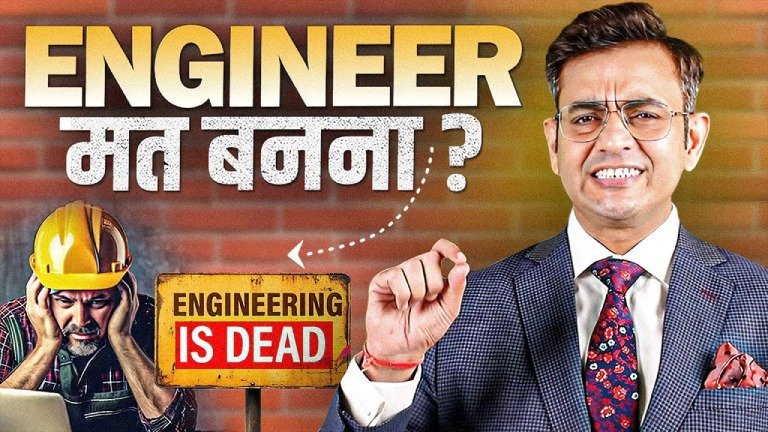
Engineering in India isn’t simple to sum up. It isn’t the golden ticket people once believed it to be. But it’s also not the dead end that gloomy headlines love to suggest. Somewhere in between lies the truth. A career that rewards those who adapt, who keep learning, who build skills that stretch beyond whatever’s printed on their degree.
The door isn’t closed – nothing is impossible if you’re willing to adapt. And if negative thoughts about your college or branch keep pulling you down, learning how to stop negative thoughts can help you refocus.
If you’re a student or a fresh graduate reading this, the takeaway is simple. Don’t just rely on your college or your degree to carry you forward. Build yourself into someone companies actually want to hire, and the opportunities will follow.
Frequently Asked Questions
1. Is engineering still a good career in India?
It still is, yes. But these days, success leans more on skill and adaptability than simply holding a degree. The field has changed shape, and engineers who keep learning generally do better than those coasting on what college taught them.
2. Why are many engineering graduates unemployed?
Several things feed into this. Too many colleges churning out graduates without real industry exposure. Syllabi that haven’t kept pace. And a gap between what companies actually need and what students are taught in class.
3. Which skills are most important for engineers today?
Communication matters quite a bit. Problem-solving does too, and so does AI literacy. Add to that solid technical fundamentals, plus a mindset where learning never really stops. In India’s engineering world right now, these are the qualities that seem to carry the most weight.
4. Can engineers get high-paying jobs without studying at a top college?
They certainly can. A growing number of companies care less about which college name sits on a resume and more about demonstrated skill, real projects, and how someone actually performs in an interview. Sometimes a strong portfolio opens doors that a college’s reputation never could.
5. How can fresh engineering graduates improve their employability?
Work on real projects. Get internship experience under your belt. Sharpen communication skills. Stay current with tools the industry actually uses. These are among the more effective ways graduates can boost how employable they are.