





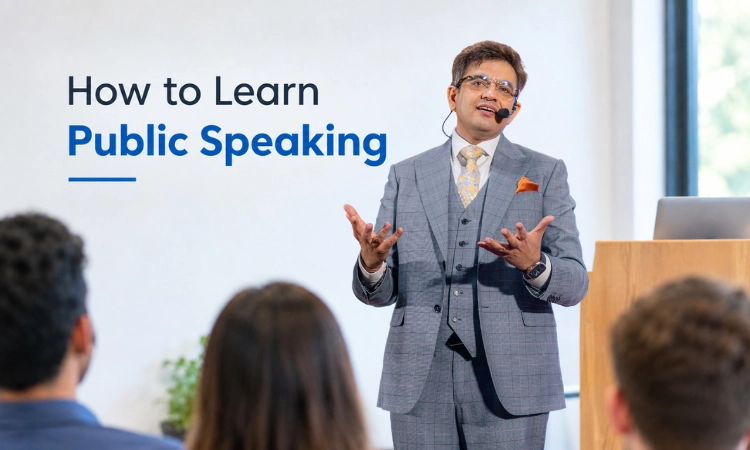
Public speaking is one of the most difficult and challenging communication skills you can acquire or develop in your career or life. However, stage fear is very common in people and almost everybody hesitates when they need to speak with multiple people watching them. People are mostly afraid of speaking in front of an audience because they’ll be judged or they’ll make mistakes that will make people laugh at them.
Whatever the reason, to master public speaking and overcome stage fear, you need to follow certain tips that will help you. So, in this guide, we’ll discuss how to learn public speaking and tips to overcome your stage fear.
Why Are People Afraid of Public Speaking?
There is a reason this fear manifests itself so often, and the explanation lies less in personality than biology. Speaking in public triggers your brain’s reaction to exposure. Not necessarily a life-threatening one, but definitely the sort of social threat that our ancestors used to take very seriously because being judged by the crowd had consequences in their time. Your heart starts racing, your palms become sweaty, your mind gets scrambled, and this is what we tend to refer to today as public speaking anxiety.
Some common roots of this problem include:
- Fear of being judged or ridiculed
- Negative past experience of getting stuck, losing lines, or drawing a blank
- Comparing yourself to speakers who seem to be naturally talented
- Simply a lack of practice, which makes every speaking opportunity a new challenge
Being aware of these reasons doesn’t make them go away immediately. But it does help to understand that your brain isn’t broken; it’s doing its job perfectly well. If you want professional help with your skills, then you can partner with a personal development speaker in India.
Mindset Shifts Before You Start
There are some changes in your mindset that should take place before any other technique becomes applicable. Attempting to “fix” your nerves with the help of some tips and tricks without addressing the way you perceive speaking will hardly work under pressure. Before
Start with this: nervousness is not a sign of underconfidence. It is just energy with no particular focus. Even experienced speakers are still nervous, but they have found the way to channel that energy into the performance, and not away from it. Stop comparing yourself to other speakers.
Next, forget about perfection and aim to deliver something valuable. The audience is not grading your performance; they are listening for something useful or relevant to them.
Last but not least, you should correct your voice, too. If you keep telling yourself that you will do something wrong, you are rehearsing the failure. Learning how to Stop negative thoughts before a talk is half the job.
10 Practical Tips to Learn Public Speaking
This is where the practical part begins. Together, these 10 tips provide a real roadmap if you are ready to how to learn public speaking.
1. Start Small
Forget about your dream of delivering a TED talk on your very first attempt. Just start speaking more often during meetings, talks in front of your relatives after dinner. Just record yourself on your phone and watch the video.
2. Know Your Topic Deeply
Confidence never comes from charisma; it comes from proper preparation. If you have a good knowledge of your topic, you stop thinking about what you will say next because you know it. Never underestimate the power of self-belief in public speaking as it leads to confidence.
3. Structure Your Talk
Every successful speech is well-structured. You should have an interesting opening, three main points (not seven and not just one), and a strong closing.
4. Write Bullet Points, Not a Full Script
Speaking from the script sounds robotic, and in case you forget where you are, panic sets in very quickly. With bullet points, you can speak on your own without following word-for-word.
5. Practice Out Loud
Reading and speaking are two very different things. Moreover, speaking in public is a whole new ball game altogether. Use a mirror or shoot a video. Watch it back objectively, don’t judge yourself, but just mark something to improve on your next attempt.
6. Master the First 30 Seconds
Most of the fear comes within the first 30 seconds of the speech. Memorise your opening sentence; do it in such a way that you could repeat it even when you are half asleep. After passing the first 30 seconds, everything else flows naturally.
7. Control Your Breathing
Before starting, slow down your breath. Here’s one of the easiest breathing exercises for anxiety while public speaking: breathe in for four seconds, hold for four, breathe out for four.
8. Use Your Voice Well
Pauses, speed of speaking, and voice volume are more important than most people think. Slowing down at certain points and holding a pause after the important phrase helps it to resonate. Fast speaking is a sign of nervousness.
9. Use Body Language
Your posture, eye contact, and gestures. Stand tall, don’t lock your arms and let the natural gestures come out of your speech.
10. Tell Stories
Facts are easy to forget, but stories stay in the memory of the audience. Short and relevant stories are one of the most effective speaking techniques that you can use.
How to Overcome Stage Fear: Techniques That Work?
Learning the techniques listed above is the first step; mastering them is another story. Here’s how you can handle each stage of the process.
Before You Go on Stage
- Arrive early; the space should feel familiar to you.
- Inspect the venue, the microphone, and where you will be standing.
- Warm up your voice; just a few hums or vocal exercises.
- Do some light exercise, stretch, shake your hands, and walk around.
While Speaking
- Use pauses instead of filling the silence with “um” and “like”.
- Identify 1-2 friendly faces in the audience and address them.
- Go slowly; the majority of speakers tend to rush.
If You Forget Your Lines
Just take a deep breath. Honestly, one long breath can help you a lot. Look at your notes if you have them. Repeat your last point in other words.
After You Speak
First, review what went well. After that, find one thing to improve next time. Criticising yourself for everything that went wrong is a sure way to demotivate you before you even develop the skill.
If your event is related to sales, then you should also know how to handle sales rejections so that you don’t get affected by rejections.
Common Public Speaking Mistakes to Avoid
There are some habits that ruin lots of good preparation. Be sure to avoid these mistakes:
- Speaking too quickly, usually due to nervousness, not the content.
- Using slides as reading aids and thereby separating from the audience immediately.
- Not looking into the eyes of the people in front of you, making yourself look uncomfortable even if you’re not.
- Starting your speech by apologising for a lack of skill and planting doubts.
- Trying to be perfect, which makes you sound stiff and artificial.
- Not hiring a good inspirational speaker for companies.
A Simple 30-Day Practice Plan
In public speaking, consistency wins over intensity. Consistent fifteen-minute daily practice will get you farther than one-hour monthly practice. Here’s one of the most effective structures for public speaking practice exercises:
Week | Focus | Daily Activity (10–15 min) |
1 | Comfort | Speak to the mirror for 2 minutes on any topic |
2 | Structure | Make a recording of a 3-minute talk with introduction, key points and conclusion |
3 | Delivery | Review recordings and work on pacing, pauses and gesturing |
4 | Real Audience | Talk to your friends, speak at a meeting, deliver a speech to a local club |
Conclusion
Public speaking does not mean that you need to remove all the fear inside you. That is practically not possible for anybody, and it won’t help you at all. Improving public speaking skills is about preparing and structuring the speech and repeating the process enough times, so that fear will not take over anymore. Do it gradually, know the topic, breathe well and let yourself grow bit by bit. All these skills will come naturally to you through your work experience, communication and perception in general.
Frequently Asked Questions
1. How long does it take to learn public speaking?
There is no exact period, but most people see noticeable progress in 4-8 weeks of consistent practice. It depends not on how much you read about it, but how often you actually speak in front of others.
2. Can shy people become good public speakers?
Yes, and usually shyness makes them very good speakers in the long run, because they tend to prepare better and listen more carefully to the audience.
3. What is the fastest way to overcome stage fright?
The combination of controlled breathing right before the speech and small audiences initially is the fastest way to get rid of it. There is no quick fix to it, but this combination works faster than most other methods.
4. Is stage fright a mental health issue?
No, stage fright is a kind of nervousness caused by a specific situation. But there is a small percentage of people for whom it becomes a more serious anxiety disorder, and you may need to talk to a professional if it affects your everyday life a lot.
5. What should I do if I go blank during the speech?
Take a pause, breathe normally, take a look at your notes if you have them, and repeat your last point using different words. People hardly ever notice a pause; it’s you who thinks they do.